Wednesday, May 27, 2015

"I must be CRAZY!" -or- Entering My First A & S Pentathlon

I have not posted in awhile, not (just) because I am a procrastinator, but MOSTLY because I have been pretty busy for the past, well, just about a year. This past weekend all the hard work came to its completion as I entered my first (and most likely last) Pentathlon at the Middle Kingdom Arts and Science Faire.

My entry began with an inspiration, partly form a painting, and partly from a class I took taught by Duke Alen. The painting is of a woman applying henna, and the class (on metal punch work) was also used as a Demonstrating Period Activities entry. These two things together made me realize that henna application would fit this entry category perfectly.

As there were also other projects I was inspired to work on, I decided to build a Pentathlon entry (this is 5 entries in 5 separate categories of at least 4 different divisions) around Safavid Persian accessories. As I wanted to focus more than one entry on henna, I also wrote a research paper on, what else, henna!

While this was a large and stressful endeavor, I certainly learned a great deal, and not just about each craft or technique. Most importantly I learned the importance of giving myself MORE time to complete projects that have a deadline, as I really have a poor understanding of how long it takes me to complete things.

Never the less, all 5 projects were complete and ready for the Pentamere Regional A&S Faire. This year's faire was at an event held 5 houses down the street from me. It was nice to be able to walk to the event, and come back home on my one break to relax in quite. My neighbors must have thought I was very odd though, seeing me walking down the street in my Persian garb!

Regional went well, and though I wasn't thrilled with (and a bit surprised by) the research paper scores, I had 3 firsts and 2 seconds, qualifying me for Kingdom! I was also the Pentamere Pentathlon winner/Regional A&S champion... but only by default as I was the only Pentathlon entry.

Moving forward to the Kingdom A&S faire... so I learned it is a bit nerve-racking to go from the ONLY Pent entry to being one of EIGHT!!! The most ever in the Middle Kingdom, at the largest Kingdom A&S Faire to date. So, being part of that historical event is pretty awesome in and of itself!

After my initial nerves settled, I had a wonderful day and greatly enjoyed the discussions I had with all the judges throughout the day. Outside of the competition, I also got to chat with a few newer friends a don't see often, and met several great people. I got to see 4 VERY deserving individuals that I highly admire and respect get put on vigil (3 for Pelican and 1 for Laurel), watch an amazing artisan (who judged 2 of my entries, was incredibly encouraging and had great and very useful feedback) be elevated to the Order of the Laurel, and was witness to the making of our new Prince and Princess!

Ok, back to my entries... overall I did well, 3 firsts and 2 seconds again (the research paper is only judged once, so the same score stands). And while I did improve me scores on some entries, a couple were down a point or less. In the end, my Kingdom score was slightly lower than Regional. In the end I placed 5th out of the 8 Pent entries... and seeing the other entries, I am pleased to have been amongst them and held my own!
All in all it was a tremendous learning experience, great fun (at the faires), and I am very glad for what I accomplished (and glad it is over)!

Kingdom A&S entries display

Here are the photos from my entries at Kingdom (with a few photos from Regional as well). With each entries photo is a link to the documentation.

Division I Performance Arts: Demonstrating Period Activities, Applying Henna


Henna application demonstration at Regional A&S faire


Applying Henna Documentation


Division II Textile Arts: Costume: Accessories, Safavid Women's Head Wear


Safavid Women's Head Wear Documentation


Division III Technological Arts: Casting, Safavid Style Pewter Cast Buttons


Pewter Buttons Documentation
Division IV Studio Arts: Decorative Metalwork, Safavid Amulet Case


Safavid Amulet Case Documentation


Division III Technological Arts: Research, Henna Research Paper


Henna Research Paper


Regional Display


Sunday, March 8, 2015

Finishing up some loose ends...

With so much social media (Facebook, Pinterest, etc.) as an outlet, I sometimes forget to keep this blog updated. Here are a few photos of some of my recent (and not so recent) work, as well as my most recent class handouts.

 Recreating Safavid Head Wear

Some of my recent attempts at recreating braid casings and carqad.


Safavid Women's Head Wear Class Handout


Introduction to Persian Clothing (Women's) Class Handout

Documentation Class Handout


Sunday, September 28, 2014

2014 Kingdom A & S Faire


I am very pleased to report that my boots took a first place at the Middle Kingdom Arts and Science Faire! I had a great time and learned a lot from the discussions with the judges. Face to face judging is one of my favorite parts of entering A & S competitions. I was also thrilled to be able to judge two entries from a very talented women who's A & S endeavors into researching and recreating period body care products I greatly admire!


My revised documentation can be found here: Safavid Sock-boots


For the love of the arts...


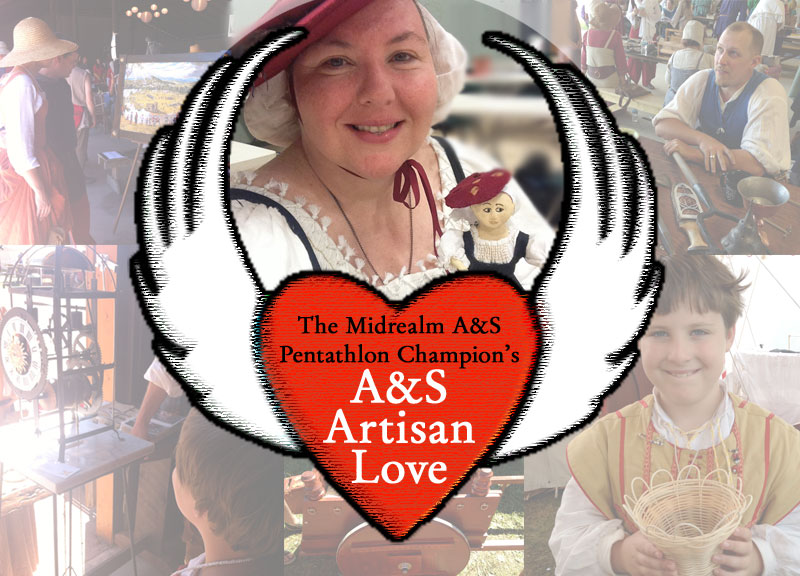
This week I was VERY honored to have been included as a featured artisan on Genoveva Von Lubeck's SCA Artisan Love blog! Please check it out (and the articles she wrote on other, very talented Midrealm artisans) here.

Thank you for the wonderful article, Genoveva!


Sunday, May 4, 2014

A Rose, by any other Name...

So, I have finally, officially changed my persona name to something more... Persianish? If I were following period Safavid naming practices I would probably have a Turkish name (but whos' Turkish? The Ottomans? The Turks? It's all a bit confusing...) I played with a few names that had meanings I liked, but in the end did not like how they sounded. The new name is (drum roll...) Asalah al-Hina. Asal means honey in Persian/Farsi, but I didn't think it sounded very feminine. Asalah, actually an Arabic name, means Nobility of descent.

I will mostly be using this name for "official" things, it's on my new SCA card, class handouts, etc., but I'm sure everyone will continue to call me Anabel, which I really like. It's just not correct for a Safavid woman, so Asalah it is!

Thursday, April 24, 2014

Switching gears... new project, new documentation

So this year I decided to take a little break from henna research and focus more on my garb and garb accessories. In particular I have been trying to find correct Persian shoes. No one seems to be making them, so I decided "why not make them myself?" making leather shoes seemed very daunting to me, but fabric boot? No problem! Ok... not so simple, but very doable.

I chose these buskins to recreate, found in Women's Clothing of the Near and Middle East by Jennifer Scarce.


The first pair I made turned out great, though a little too big.


The second pair was reworked to fit better, and is fully documented (to the best of my current abilities) and the documentation can be found HERE. These boots are being entered in the Pentemere Regional A & S Faire this weekend... wish me luck!


UPDATE!!!
My boot project received a First Place at the Pentemere Regional Arts & Science faire and will be entered in the Midrealm Kingdom A & S faire May 24th!


Saturday, June 1, 2013

A&S Project: Henna from Plant to Paste

This year's A&S project dealt with growing my own henna plant (VERY special thanks to Sir Donas/Tommy Roberts who is really growing the plant as he has better space for it in his house) and creating paste from its leaves. I dried and ground the leaves, used ingredients (water and lemon juice) found in historical henna recipe references, and compared the stain from this paste to paste made from commercially produced henna powder.


Last year my goal was to qualify to go to Kingdom A&S (receive an 1st or 2nd at Regional... I received a 2nd at Regional and went on to receive a 1st at Kingdom). This year's goal was to do a little better, upping my scores in the creativity category as well as qualify for Kingdom and placing well. I received a 1st place at both Regional and Kingdom level A&S.

As great as it is to place well and receive high scores for my project, the most exciting part for me is getting to share my art and my knowledge, as well as learn something new in the process. This year at Regional I learned the I was using the wrong type of mortar and pestle to achieve as fine a grind as i was looking for. I was told I needed an unglazed porcelain mortar. I then ordered one on-line in order to update my documentation before Kingdom A&S. Unfortunately it was back-ordered and did not arrive in time.  However, while walking past the merchants on the way to the judges and entrants meeting at the event I found just type of mortar I needed (Much thanks to Duchess Rebekah!). I just happened to have some extra ground henna leaves and reground them in the porcelain mortar. I was so excited to find how easily the leaves ground to a very fine, lush green powder!

 Here is the link to the project documentation. Plant to Paste

Sunday, March 10, 2013

Branching out...

Though this blog was originally created to document my henna research and journey in the SCA, I have decided to add my research and projects in Persian studies as well. Along with research henna in the medieval period, I am working to develop my persona and garb from Safavid Iran.

While I have been working on creating garb appropriate to the period for several years, I feel I am just now really getting into the "good stuff"... creating a full outfit, using more appropriate fabrics, and adding the accessories such as head wear, jewelry, and footwear.

My next two projects will be dealing with head wear, specifically braid casings a veils, and creating a prototype of a period pouch.

More info and pictures to come...

Sunday, February 3, 2013

A&S Project: A Comparison of Modern and Historical Henna Application Techniques

Here is the link to my A&S project from 2012. This was the first project I had ever entered in a regional competition. My goal was to qualify for Kingdom A&S (receiving a 1st or 2nd at regional). I received a 2nd place at regional, and a 1st at the Middle Kingdom A&S faire! Not too shabby for my first try...

A&S 2012

More class notes...

Now that I have figured out how to use Google Drive, I am adding more of my class notes.
This link will open my notes on henna in 16c Safavid Persia. It is a large file with a lot of color pics, so please be patient opening it!

Henna in 16c Persia


The second link is a short handout from my mixology class.  It contains much of the same info from the intro class.
 
Henna 102 -Mixology

Saturday, December 1, 2012

Notes from my SCA henna classes...


As one of my reasons for having this blog is to post my henna documentation and class notes, I suppose I should start doing just that! :) These notes are from my Intro to Henna class that I have taught at many events over the past 5+ years, including 3 years at Pennsic.

An Introduction to Henna
THL Anabel de Berchelai  info@gildedlotushenna.com
Henna in SCA Period: A brief history
Henna is one of the oldest known and widely used cosmetics of all time. Archeologists have found henna on the hair and nails of Egyptian mummies, dating it’s use as far back as 3000 BCE The use of henna was popularized in Saudi Arabia around 632 CE  by the prophet Mohammed who used it to color his hair and beard. Henna traveled from Egypt to India, North Africa, South East Asia, and the Middle East, and it’s use was common all around the Mediterranean in medieval times. It’s use and practices can be seen in paintings, illuminated manuscripts, and miniatures from India, Persia, and Turkey, as far back as the 11th century.

What is henna? How does it work?
Henna is a Persian word, which describes a small flowering shrub (Lawsonia inermis). Henna powder is made from the dried and crushed leaves of the henna plant. Henna powder, in its pure and natural form, is a bright or deep green, khaki or brown. The stain produced by natural henna ranges in color from pale orange to red, chocolate brown, black cherry and near black color. Contrary to the popular belief, pure black color is not produced by natural henna powder. Henna is never black! So called “black henna” contains para-phenlendiamine- a chemical hair dye. Applying PPD, or any other caustic chemical to skin can cause severe allergic reactions, blistering, permanent scarring and possible future health complications.
The leaves of the plant contain a dye (Lawsone), that, when mix with water or other ingredients, can stain natural fibers including wood, silk and wool, human hair, nails, and of course, skin. After the paste is applied, the dye molecules attach to the keratin in skin (or other fibers). When the paste is removed the stain oxidizes, much as some fruit turns brown when cut and exposed to air.

Mixing the paste
As henna recipes and practices were handed down generation to generation, the basic recipe has probably not changed too much since medieval times. The basic ingredients include henna powder (dried and crushed leaves of the  Lawsonia inermis plant), something acidic to release the plant’s dyes (lemons and limes were found to be used in period), and something sweet and sticky to help the paste stay on the skin (honey was the most common and readily available sweetener in the SCA time period). Essential oils that contain monoterpene alcohols are added to help bring out the dye as well as make the paste smell good!

A basic henna recipe
Ingredients:
Henna powder (Jamila brand is recommended and does not need sifting)
Lemon juice
Essential oils (Lavender, Tea Tree, Cajeput are all mild and work well)
Sugar (table sugar, sugar substitute, honey)

In a glass, ceramic or plastic bowl mix together 20grams (about ¼ cup) henna powder and ¼ cup lemon juice. Stir with plastic or wooden spoon as metal may react to the acidity in the lemon juice. The paste should be thick, about the consistency of lumpy mashed potatoes. Cover with plastic wrap (push wrap down over surface of henna so it is mostly airtight and add a second layer of wrap over the bowl). Let the paste sit in a warm area (70-80 degrees F) for 8-12 hours. Add 1-1 ½ tsp. of essential oils and about 1 ½ tsp. of sugar. Use a little less if using honey. Stir until smooth, cover again with plastic wrap and let sit again for another 8-12 hours, or until dye release. The surface of the paste will turn brown when it has achieved dye release. Stir in enough lemon juice, a drop or 2 at a time, until the consistency you would like is reached, similar to that of yogurt. Cone or bottle henna and use within 2-3 days or refrigerate up to a week or 2, freeze up to a year.

Application
Henna application has changed greatly since ancient and medieval times. Though there is minimal evidence of actual period application techniques, some period practices may have included dipping fingers, hands and feet, as well as applying henna patterns with a brush, a stick, a wire, a quill, and even by hand. While many of these practices are still in use today, henna is most commonly applied using plastic or mylar cones or jacard bottles. Use of these modern tools assures that henna designs are applied more precisely with less practice, and less mess.

Applying henna with a cone
Begin by cutting a very small opening in the tip of the cone with scissors or nail clippers. Hold the cone similar to how you would hold a pencil or paint brush. Applying light pressure on the end of the cone with your thumb, slowly squeeze out the henna paste, applying the desired design. Once the design is applied, leave the paste on as long as possible, 1-2 hours minimum, 6-8 or longer is prefered. The henna paste can be sealed with a lemon/sugar mixture, covered with medical tape, or wrapped in toilet tissue to help keep it on as long as possible. Keeping the paste warm and moist will also allow more dye to penetrate the skin. Wrapping as well as steaming the paste will help to keep it warm. Once the paste is removed, avoiding water exposure for 6-12 hours will help the stain fully develop its color. The mature stain will be revealed in 24-48 hours, and as the skin exfoliates the stain will begin to fade. Applying a beeswax based balm or vegtable oil over the design will help prolong its life, especially when swimming or bathing.

Henna Suppliers and Resources

http://gildedlotushenna.com                             My website
http://www.hennapage.com                              Complete source of henna how to, info, free patterns
http://www.hennatribe.com                              Henna related forums and information
http://www.mehandi.com                                  Henna, supplies, and henna related items
http://www.hennacaravan.com                       Henna and supplies
http://www.magicalmehendi.com                    More henna and supplies
http://www.hennadancer.com                          Henna artist & SCA member in New Britain, CT
http://www.benttreedesign.com                        Henna artist & SCA member in Athens, OH


Tuesday, July 3, 2012

getting started...

I have been trying to put together a blog to share my henna research and class information from the SCA for over a year now. Not being computer/website/blog savvy it has taken be a lot longer than I had hoped. Now that I have a semester break from working on my Masters degree hopefully I can make the time to work on my postings.

I began studying henna in 1997 after learning a bit about it and having my first henna design done at Pennsic. Around the same time (give or take a year or so) I started belly dancing and became interested in researching Medieval Middle Eastern culture in the SCA (Society for Creative Anachronisms).

Jumping forward to 2012 I have now been doing henna for parties, private appointments and art fares for 5 years, and have taught classes on henna at numerous events (this will be my 3rd year teaching at Pennsic!) in the SCA.

my henna project at the A&S display at Pennsic 40
Oh yeah, and earlier this year (September 2011) I received my Evergreen (grant level A&S award) for teaching and researching henna, and received a first place in my very first Kingdom level A&S competition at Middle Kingdom Crown Tourney this spring.

receiving my evergreen from TRM's EikBranbr and Runa


Well... I guess that is enough for now. Next I need to try and find out how to attach files.